Beyond The Dialogues
Tracking Ghana’s Commitments to Transform Its Food Systems
A national accountability and evidence platform monitoring Ghana’s commitments to build a more resilient, equitable, and nutrition-secure food system by 2030.

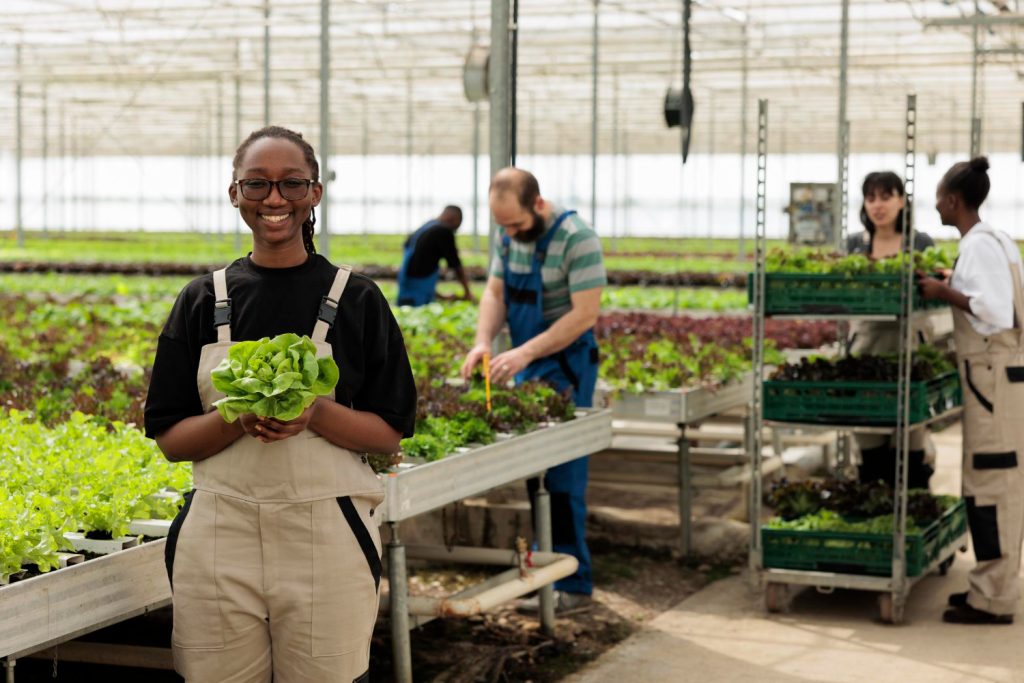
Beyond the Dialogues is a national accountability and knowledge platform established to track Ghana’s commitments to food systems transformation by 2030. The platform consolidates the Government of Ghana’s 17 food systems commitments and the associated 71 indicators into a structured, transparent, and accessible framework.
Project Coordinators



Beyond The Dialogues
Food Systems Transformation Challenges
Toward addressing these challenges and transforming Ghana’s food systems, Ghanaian food systems stakeholders and actors proposed “potential game-changing solutions”. A comprehensive list of the proposed solutions can be found in the synthesis paper (“Ghana Food Systems Summit Dialogues Synthesis Papers”, 2022) which include; strengthen end to-end planning for sustainable food production (toward assuring food and nutrition security);
Illegal mining (galamsey) and agrochemicals in farming
Inappropriate use of chemicals in fishing
Food loss, fragmented food chain, poor transport, poor road linkages from farm to market
Lack of spatial planning of cities – making urban agriculture impossible
Poor legal framework on land scheme
Lack of know-how and technology to implement climate-smart agriculture
Treatment of farmers as a homogenous group. Different categories of farmers have different needs which must be studied/addressed
Lack of storage facilities such as sheds for livestock to protect against impacts of weather changes
Low capacity of local farmers to produce healthy and sustainable food
Poor access to finance and loan credit for the production of healthy and sustainable foods.
Beyond The Dialogues
Food Systems Transformation Objectives
The General Objective is to implement a science-based tracking of Ghana’s commitments to transform its food systems and conduct a cost-benefit analysis to assess the economic efficiency, viability, and societal impact of the commitments
Objective #1
To identify, adapt, and develop a set of indicators to be used in monitoring Ghana’s commitments
Objective #2
To assess the scope and quality of implementation (including measuring and verifying the progress made towards fulfilling the specified commitments and their associated targets)
Objective #3
To identify implementation obstacles or challenges (including logistical, financial, technical, socio-political, or environmental barriers)
Objective #4
To conduct a cost benefit analysis to assess the economic efficiency, viability, and societal impact of the commitments.
Objective #5
To enhance government and other food systems actors’ accountability and transparency by publicly reporting on the progress, challenges, and impacts of the pledges
Objective #6
To use the insights gained from the assessment to inform future planning, scaling out and scaling up of successful innovations
Beyond The Dialogues
Food System Commitment Goals by Government of Ghana
Overall, the UNFSS Dialogues and the Summit catalysed clarity on the need and urgency for food systems transformation to achieve sustainable healthy diets for all Ghanaians. The process motivated National Commitments to achieving the following Food Systems Transformation targets by 2030.
By 2025, the Government of Ghana will increase the percentage of early initiation of breastfeeding within 1 hour from 52%... (Click to read more)
By 2025, the Government of Ghana will reduce all forms of malnutrition; including the prevalence of stunting in children under... (Click to read more)
By 2024, the Government of Ghana will increase maternity leave to 14 weeks to be implemented across all sectors of... (Click to read more)
By 2022, the Government of Ghana will develop and implement a comprehensive Food and Nutrition Security Strategy, which will lead... (Click to read more)
By 2023, the Government of Ghana will develop and implement food-based dietary guidelines that define context-specific sustainable healthy diets; and... (Click to read more)
By 2024, the Government of Ghana will compile, consolidate, and update local food composition databases, and develop a nutrient profiling... (Click to read more)
By 2028, the Government of Ghana will reduce food losses and food wastes from 20% to 10% and from 84... (Click to read more)
By 2030, the Government of Ghana will achieve seed security, breed security and land security for Ghanaian farmers, especially women... (Click to read more)
By 2023, the Government of Ghana will jointly agree with multilateral agencies, civil society, and donors on coordination and oversight... (Click to read more)
By 2023, the Government of Ghana will ensure that government plans, policies, and strategies are climate compliant, risk-informed, conflict-sensitive, shock... (Click to read more)
Beyond The Dialogues
Funding Acknowledgments
The Beyond The Dialogues (BTD) Project is made possible with financial support from the International Development Research Centre (IDRC), Canada, and The Rockefeller Foundation through the Catalyzing Change for Healthy and Sustainable Food Systems (CCHeFS) Initiative (Grant No. 110345)